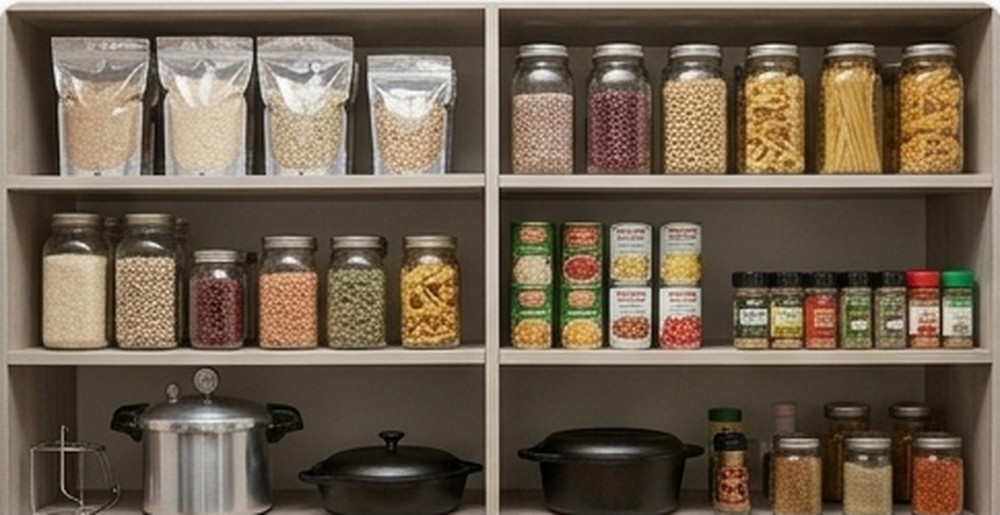
The 12-Month Pantry
Most emergency food advice stops at 72 hours. A proper pantry goes further: enough to cover a bad month without a single trip to the shop, built from food you'd eat anyway, rotated so nothing is ever wasted.
★ Our Pick: ReadyWise Emergency Food Supply Bucket →“The more prepared people are, the better off they will be.” — FEMA External Affairs Specialist, on the shift from 72-hour to two-week household guidance
Why 12 Months, Not 3 Days
A 72-hour kit gets you through a power cut or a storm. It does nothing for a job loss, a supply chain disruption, or a slow-moving crisis that drags on for weeks. A deep pantry is cheaper per meal than the 72-hour kind of shopping, because you buy in bulk and on sale rather than in a panic the night before a storm hits.
Building Your Rotation
The single biggest failure mode in emergency food storage isn't running out — it's throwing away five-year-old tins nobody wanted to eat. The fix is simple: only store food your household already eats regularly, buy a bit extra each shop, and always take from the front of the shelf while restocking at the back.
- Start with a 2-week buffer of your normal meals before trying to reach a full year
- Keep a simple list on the pantry door of what's in stock and its use-by date
- Shop the sales — bulk-buy staples when they're discounted rather than at full price under pressure
- Cook from the pantry once a week on purpose, so rotation becomes a habit, not a chore
What to Actually Stockpile
A year of food isn't a year of the same ten tins. Aim for a mix across these groups, weighted toward what your household already cooks with:
- Grains & legumes — rice, pasta, oats, dried or tinned beans and lentils. Cheap, filling, and stores for years if kept dry
- Tinned protein & vegetables — tinned meat, fish, and vegetables need no cooking at all if it comes to that
- Fats & oils — cooking oil, ghee, and nut butters add calories that grains and vegetables alone don't cover
- Salt, sugar & seasoning — cheap, doesn't spoil, and makes a month of pantry meals bearable instead of grim
- Morale food — coffee, tea, chocolate, sweets. Sounds trivial until you're three weeks into a real disruption
Calculator: How Much Food Do You Need?
Stockpiled food is only useful if you can actually cook it. Plan for a stretch with no mains electricity or gas:
- A camping gas stove or twin-burner butane hob covers most hot meals — keep at least a few spare canisters
- A cast iron pan or Dutch oven works on a gas ring, a fire, or camping stove alike
- Keep a stock of meals that need no cooking at all — tinned food, crackers, peanut butter — for the first day before you've set anything else up
- Never run a gas or charcoal stove indoors — carbon monoxide risk is real and it's the most common way this kind of setup goes wrong
Storage & Shelf Life
Where and how you store food matters as much as what you buy:
- Cool, dark and dry beats a hot kitchen cupboard every time — a cellar, understairs cupboard, or garage shelf will roughly double shelf life over a warm room
- Decant dry goods like rice, flour and pasta into sealed containers — bags alone let pests and moisture in
- Oxygen absorbers in sealed containers meaningfully extend shelf life for rice, beans and grains bought in bulk
- Label everything with the date bought, not just the printed best-before, so rotation is a five-second glance, not a guessing game
Shop This Kit
Emergency Food Storage Kit