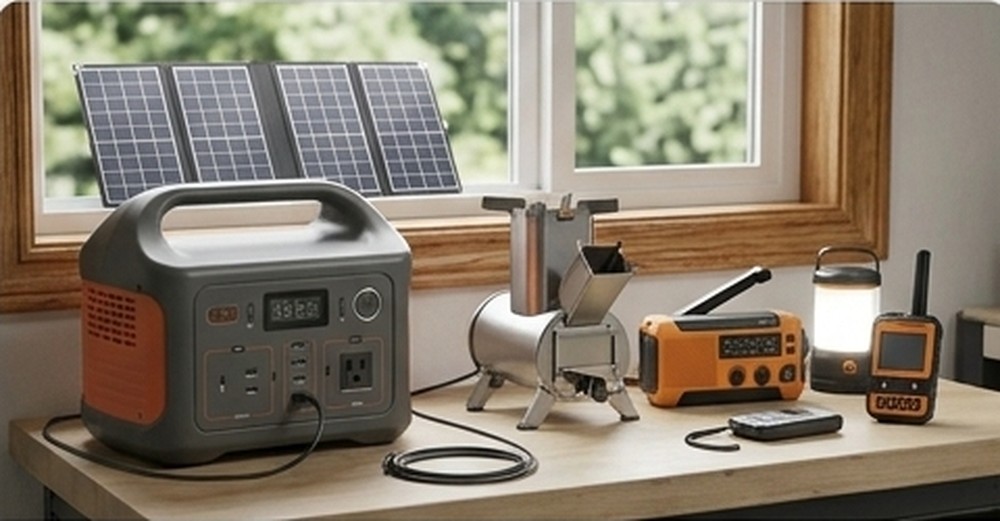
Power, Heating, Lighting & Communications
Life Without the Grid
A power cut that lasts an evening is an inconvenience. One that lasts a week changes what you can cook, how you stay warm, and whether you can reach anyone. Plan for the second kind.
★ Our Pick: Anker SOLIX C300X Portable Power Station →100+
cars' worth of carbon monoxide a single portable generator can produce
US Consumer Product Safety Commission
5x
rise in fatal generator CO poisonings from 2000 to 2018
Pediatrics journal study
Power & Backup Charging
Work out what actually needs power first — phones and medical devices before anything else — then size your backup to that, not the other way round.
Calculator: Power Station Runtime
- A portable power station covers phones, lights and small devices for days without fuel or noise
- A solar panel keeps a power station topped up indefinitely if the outage runs long
- A small generator covers heavier loads (a fridge, a sump pump) that a power station can't — but needs fuel storage and must only ever run outdoors
- Keep a simple priority list: medical devices and phones first, fridge and freezer second, everything else after that
Heating & Lighting
Losing heat is more dangerous than it sounds, and losing light changes how safely you can move around your own home.
- A propane heater rated for indoor use, with proper ventilation, is the standard safe option for short-term heating
- Layer with blankets, thermal clothing and a hot water bottle before reaching for any heater — it costs nothing and works immediately
- LED lanterns and headlamps last far longer than old-style torches and free up your hands
- Never burn charcoal, a gas stove, or an unrated heater indoors for warmth — this is the single most common cause of carbon monoxide poisoning in a power cut
Staying in Communication
Mobile networks are often the first thing to fail or get overloaded in a wider emergency. Have a way to get information and stay reachable that doesn't depend on the phone network alone.
- A hand-crank or solar emergency radio gets you local alerts and news with no batteries required
- Keep a portable charger topped up specifically for your phone — don't rely on the same power station for everything at once
- Agree an out-of-area contact with family in advance — sometimes a call out of the affected area connects when local calls won't
- Text messages often get through when voice calls fail, since they need far less bandwidth
Fuel Storage & Safety
Whatever you're storing to run a generator, stove or heater, store it properly:
- Store fuel in approved containers, outdoors or in a detached, ventilated space — never in the house
- Rotate stored fuel periodically — most fuel types degrade over 6-12 months without a stabiliser
- Fit a battery-powered carbon monoxide alarm regardless of what fuel-burning equipment you keep, and test it
Shop This Kit
Power Outage Survival Kit
Anker SOLIX C300X Portable Power Station
Check Current Price on Amazon →
Anker SOLIX PS100 100W Solar Panel
Check Current Price on Amazon →
Wind-Up Solar Hand Crank Emergency Radio
Check Current Price on Amazon →
Blukar Rechargeable LED Camping Lantern
Check Current Price on Amazon →
Panasonic Eneloop Pro AA Batteries (4-Pack)
Check Current Price on Amazon →